Why the Paint on Your Ten-Year-Old Car Isn't the Paint Code Color Anymore
The number on your door jamb was accurate the day your car was painted. A decade of Panhandle sun has had other ideas since.
September 9, 2026 · 3 min read
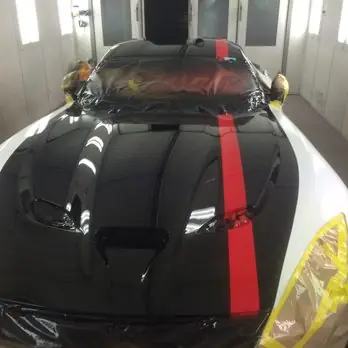
Somebody brings in a ten-year-old sedan for a repaint on one door, hands over the paint code off the door jamb sticker, and expects the shop to mix that number and be done. It is a reasonable thing to expect. It is also not quite how color matching actually works, and it is worth understanding why before you are standing in our lot wondering why the freshly painted door does not look quite right at first glance next to the rest of the car.
The paint code is where the color started, not where it is now
Every car left the factory a specific, exact color, and that number on the jamb sticker is real and accurate for the day the car was painted. From that day forward, the Panhandle sun has been working on it. UV breaks down clear coat over years, and the pigment underneath fades unevenly depending on which panels caught the most direct sun, which panel sat in shade under a carport, and which side of the car faces south on the drive to work every morning. A hood and a roof, painted at the factory from the exact same batch, can be visibly different colors a decade later just from how much open sky each one has seen.
Some colors show it more than others
Reds and darker colors tend to show fade and clear coat wear earlier and more visibly than lighter neutrals. Metallics and pearls fade in a way that is harder to spot at a glance but throws off a match badly if it is ignored, because the metal flake orientation and density shift the way the color reads in different light, not just its base tone. A car that spends most of its life parked outside, uncovered, will simply have moved further from its paint code than the same car garaged every night, regardless of color.
So matching means matching the car, not the can
This is why a real color match starts with a spray-out card: a scrap panel test-sprayed and dried, then held up next to your actual car in daylight, not under fluorescent shop light. We adjust the mix against what your car's paint looks like today, not what the code says it should look like on paper. Sometimes that is a small tint shift. Sometimes it is more, especially on an older vehicle that has spent most of its life outside.
Blending is the part that actually sells the match
Even a dead-on mix can look slightly off if it simply stops at a hard body line, because brand new clear coat sitting right next to ten-year-old clear coat catches light differently even in the exact same underlying color. That is why a repair on one panel usually gets blended into the panel next to it, feathering the new paint and clear into the old rather than stopping cold at the seam. Done right, your eye reads the whole side of the car as one continuous color instead of hunting for the line where the new paint ends and the old paint starts.
It is not only cars
The same matching problem shows up on anything we paint: motorcycles that have sat outside for years, fiberglass boat hulls, plastic bumper covers that fade at a different rate than the metal panels around them. Different materials take paint differently and fade at different rates even in the same sun, so the matching process has to account for the material itself as much as the color.
What this means for you
None of this is a reason to worry about a repair, it is a reason a shop that has been doing this since 1949 does not just eyeball a paint chip and mix a can and call it done. If you are getting an estimate on a repaint, ask to see the spray-out before we shoot the panel. It is a fair question, and it is exactly what should happen before paint goes on your car. And whatever gets sprayed, one panel or the whole car, carries a lifetime warranty, because a match that is right on day one should still be right years from now, under the same sun that faded the original.
Acme Body Shop, (806) 373-5349
Call (806) 373-5349More articles
What Happens Between Drop-Off and Getting Your Car Back
The mystery isn't the dent, it's everything that happens to the car once it's out of sight, so here's the order it actually happens in.
Filing a Claim or Paying for It Yourself
We won't tell you which choice is right, because it genuinely depends on numbers only you have.